
Chimney cleaning · San Francisco

Chimney cleaning in San Francisco

A sweep only clears the flue. What about the smoke shelf and everything below it?

No obligation. Someone answers every day, 7 a.m. to 9 p.m.

  • Around 60 to 90 minutes for a typical single-fireplace cleaning.
  • A hand-cleaned smoke shelf, an emptied ash pit, and a checked damper.
  • Access to the firebox and the ash-pit cleanout door if your fireplace has one.
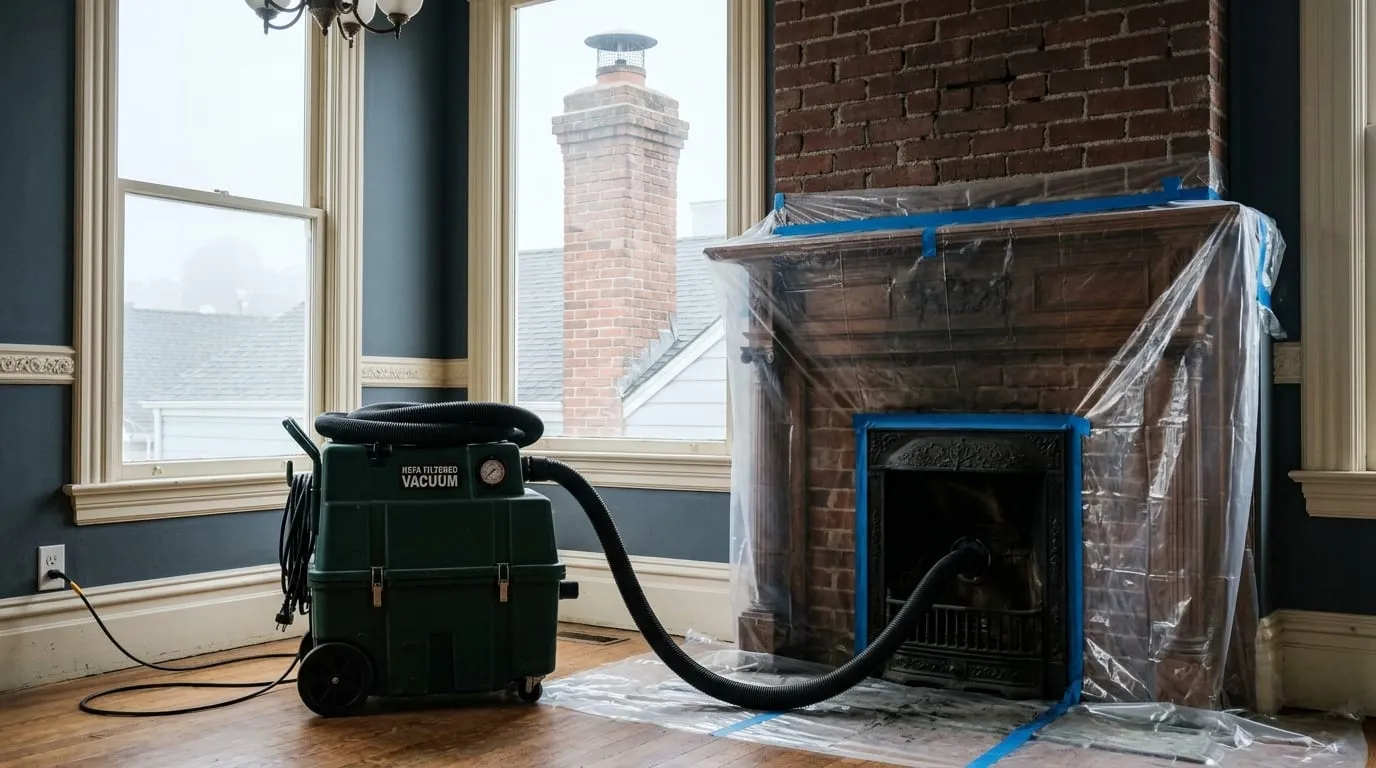
A HEPA extraction vacuum hose sealed into a firebox opening during a deep chimney cleaning in a San Francisco home

What cleaning covers

Where a sweep never reaches

The smoke chamber, the damper and the ash pit: traced against the same cutaway every service on this site uses.

The short answer

Chimney cleaning goes further than a standard sweep: it reaches the smoke chamber shelf above the firebox, the damper mechanism, and the ash pit below, all places a flue brush passing straight up the liner never actually touches. The smoke shelf in particular is where debris, old creosote and even nesting material tend to collect over years of use, and it is a common source of a lingering odor even after a fireplace has been swept clean. In San Francisco, where a fireplace often stands unused for long stretches between fires, that shelf and the ash pit beneath it can go years without ever being physically reached, simply because nobody looks past what a sweep already covers. We open up the smoke chamber, hand-clean the shelf, vacuum the ash pit, and check the damper for a proper seal: the parts of the system that keep smelling like last winter even after the flue itself is spotless.

One masonry chimney, top to bottom: the spark-arrestor cap, the crown beneath it, the flue liner running through the brick, the mortar joints, the flashing at the roofline, the smoke chamber, and the firebox at the very bottom.01020304050607
  1. 01Cap and spark arrestor Keeps fog drip, eucalyptus debris and nesting birds out of the flue. California’s fire code sets the minimum mesh spacing for the spark-arrestor screen.
  2. 02Crown The sloped slab across the top. Coastal fog settles on it for hours at a time even on a rainless day, and that standing moisture is what opens the first crack.
  3. 03Flue liner The interior channel smoke rides out on. A crack anywhere along it is a safety concern first, never just routine upkeep.
  4. 04Mortar joints In an unreinforced pre-1940s stack this is also where a shaking chimney tends to shear first, a fact tied directly to the Bay Area’s earthquake risk more than to age alone.
  5. 05Flashing The seam between stack and roof. On an older Bay Area home this seam has usually been re-tarred more than once, and a bad reseal is a common source of a slow ceiling stain.
  6. 06Smoke chamber A shelf just above the firebox that a straight brush pass sails right past. A musty smell after the season's first fire tends to start right there.
  7. 07Firebox The part of the whole system a homeowner sees every day without thinking about it, and, for exactly that reason, the last place a problem tends to surface.

Book this if you noticed

The usual signs

  • A lingering odor in the room even after the flue has been swept.
  • Ash or debris visible in the firebox that a normal sweep does not seem to remove.
  • A damper that feels stiff, will not seal fully, or rattles when moved.
  • The fireplace has stood unused for more than a year or two.

Not sure it is a cleaning you need? Call (628) 245-1261 and describe it, and we will point you to the right service.

What is included

The cleaning, scoped plainly

Included

  • Hand-cleaning of the smoke chamber shelf
  • Full ash-pit vacuum and clearing
  • A damper check for seal and free movement
  • Floor and hearth protection for the whole visit
  • A written note of anything found, before we leave

Not included

  • The flue-liner brush pass itself, bundled with a standard sweep and booked together if both are needed
  • Damper repair or replacement, quoted as its own job if the check finds one is needed

The flue-liner brush pass and any damper repair are separate, so a cleaning never turns into a surprise bill.

The visit

How a cleaning actually goes

  1. 1

    Floor and hearth protection

    The same protection as a sweep visit goes down first, covering the hearth and the walking path to it.

  2. 2

    Open the smoke chamber

    The shelf above the firebox and below the flue is exposed and hand-cleaned of built-up debris and old creosote.

  3. 3

    Empty the ash pit

    A sealed vacuum clears the ash pit completely, reaching debris a normal sweep never disturbs.

  4. 4

    Check the damper

    The damper is worked through its full range and checked for a proper seal when closed.

  5. 5

    Written notes

    Anything the cleaning finds (a crack in the smoke shelf, a damper that will not seat) goes in writing before we leave.

A HEPA extraction vacuum hose sealed into a firebox opening during a deep chimney cleaning in a San Francisco home

Cleaning specifications

Cleaning, by the numbers

What a deeper clean actually reaches, measured against the same industry standard a sweep is.

Smoke shelf
Hand-cleaned, not brushed past
Ash pit
Fully vacuumed, sealed extraction
Damper
Checked for seal and free movement
Debris handling
Sealed HEPA vacuum, floor protected
Typical visit length
60–90 minutes

NFPA 211: Standard for Chimneys, Fireplaces, Vents, and Solid Fuel-Burning Appliances.

In detail

Why the smoke shelf holds the smell

The parts of the system a flue brush passes by, and why they need a hands-on clean instead.

01The parts a sweep passes by

A standard chimney sweep runs a brush straight up the flue liner, and that motion is deliberately efficient: it clears the one passage the smoke actually travels through.

Continue reading

But a masonry fireplace has several other spaces built into it that a liner brush never physically reaches: the smoke chamber, a widening shelf directly above the firebox where the flue narrows into the liner; the damper, the metal plate that opens and closes the throat of the fireplace; and the ash pit, a cleanout chamber beneath the firebox floor in many older homes, accessed through its own small door.

Each of those spaces collects its own kind of debris over years of use: fallen soot and creosote flakes on the smoke shelf, accumulated ash below the firebox, corrosion or warping on the damper itself. None of it moves out on its own. A fireplace can have a perfectly clear, recently swept flue and still carry years of buildup in every one of those other spaces.

02Why the smoke shelf is where the smell actually lives

The single most common reason a homeowner calls about a lingering smell, even after a recent sweep, is the smoke shelf.

Continue reading

It sits directly above the firebox opening, catches falling debris from the chamber above it, and, because it curves backward out of the direct line of a flue brush, almost never gets physically touched by a routine sweep. Old creosote sitting on that shelf continues to off-gas a faint burnt smell for a surprisingly long time, especially in San Francisco’s often-damp air, which can hold odor in a way drier climates do not. Hand-cleaning that shelf directly, rather than relying on a brush pass to dislodge it, is usually what finally clears a smell that a sweep alone did not.

03The ash pit, and why an unused fireplace needs it most

Many older San Francisco homes were built with an ash pit, a cleanout chamber below the firebox floor sealed by a small door, meant to let ash simply drop through rather than be shoveled out after every fire.

Continue reading

Over years, especially in a fireplace that only gets occasional use, that pit can fill considerably without anyone noticing, since it sits below the visible firebox floor. A full ash pit restricts airflow and can hold moisture against the surrounding masonry. Clearing it is a sealed-vacuum job, not a shovel-and-bucket one: the same HEPA extraction used on the flue itself keeps the fine ash from filling the room the moment the cleanout door opens.

04The damper’s job, and why it gets checked here

A damper does two things: it seals the flue shut when the fireplace is not in use, keeping conditioned air from escaping straight up the chimney, and it opens fully when a fire is lit, so smoke has a clear path out.

Continue reading

A damper that has corroded, warped slightly, or simply gone stiff from disuse can fail at either job: leaking air year-round, or restricting draft badly enough to push smoke back into the room. Checking it is a quick, direct part of a cleaning visit: work it through its full range, check the seal when closed, and note anything that needs more than a cleaning to fix.

05Booking a cleaning in San Francisco and the Bay Area

If it has been more than a couple of years since anyone looked past the flue itself, or if a fireplace has simply sat unused for a while and you want it checked before the next fire, a cleaning visit covers exactly that ground.

Continue reading

We work across a twenty-mile radius from central San Francisco, and we will tell you plainly whether a sweep, a cleaning, or both make sense for your fireplace before we start.

Reviews

What customers actually said

5.0

23 Google reviews

A selection of our 5-star reviews on Google.

  • Taylor D.

    I was nervous about using the fireplace with our new baby in the house. They did an extra thorough safety inspection, cleaned years of buildup, installed a heavy spark screen, and tested carbon monoxide levels. Everything checked out great and we now enjoy fires with complete peace of mind.

Read all reviews on Google

Questions

What people ask about cleaning

Is chimney cleaning different from a chimney sweep?

Yes. A sweep clears the flue liner itself. Cleaning reaches further, into the smoke chamber shelf, the ash pit and the damper, places a flue brush passing straight up the liner does not actually touch.

Why does my fireplace still smell after it was swept?

Often the smell is coming from the smoke shelf or the ash pit, not the flue: debris and old creosote collect there over years and a standard sweep does not reach it, which is exactly what a cleaning visit is for.

Do I need both a sweep and a cleaning?

Usually, yes, if it has been a long time since either: we typically book them together for a fireplace that has stood unused for a year or more, since both jobs benefit from the same floor protection and access.

Can you clean a fireplace that has not been used in years?

Yes. An unused fireplace is exactly the case where the smoke shelf and ash pit most need attention, since nothing has disturbed whatever has settled there.

Will cleaning fix a stiff or noisy damper?

We check and lubricate the mechanism as part of the visit, which resolves most stiffness. A damper that is bent, rusted through or will not seal at all needs repair or replacement, quoted separately.

Book a cleaning

Tell us what you have noticed, even if it has stood unused for a while. We will confirm the right visit.

Or call (628) 245-1261 to book directly.

Tell us what changed.

Tell us what the fireplace is doing and what changed. Someone reads every message that comes in.

No obligation. Someone answers every day, 7 a.m. to 9 p.m.

Prefer to talk? Call (628) 245-1261, every day, 7 a.m. to 9 p.m.