01What a sweep actually clears
Every fire leaves behind creosote: a tar-like residue that condenses on the inside of the flue as smoke cools on its way up.
Continue reading
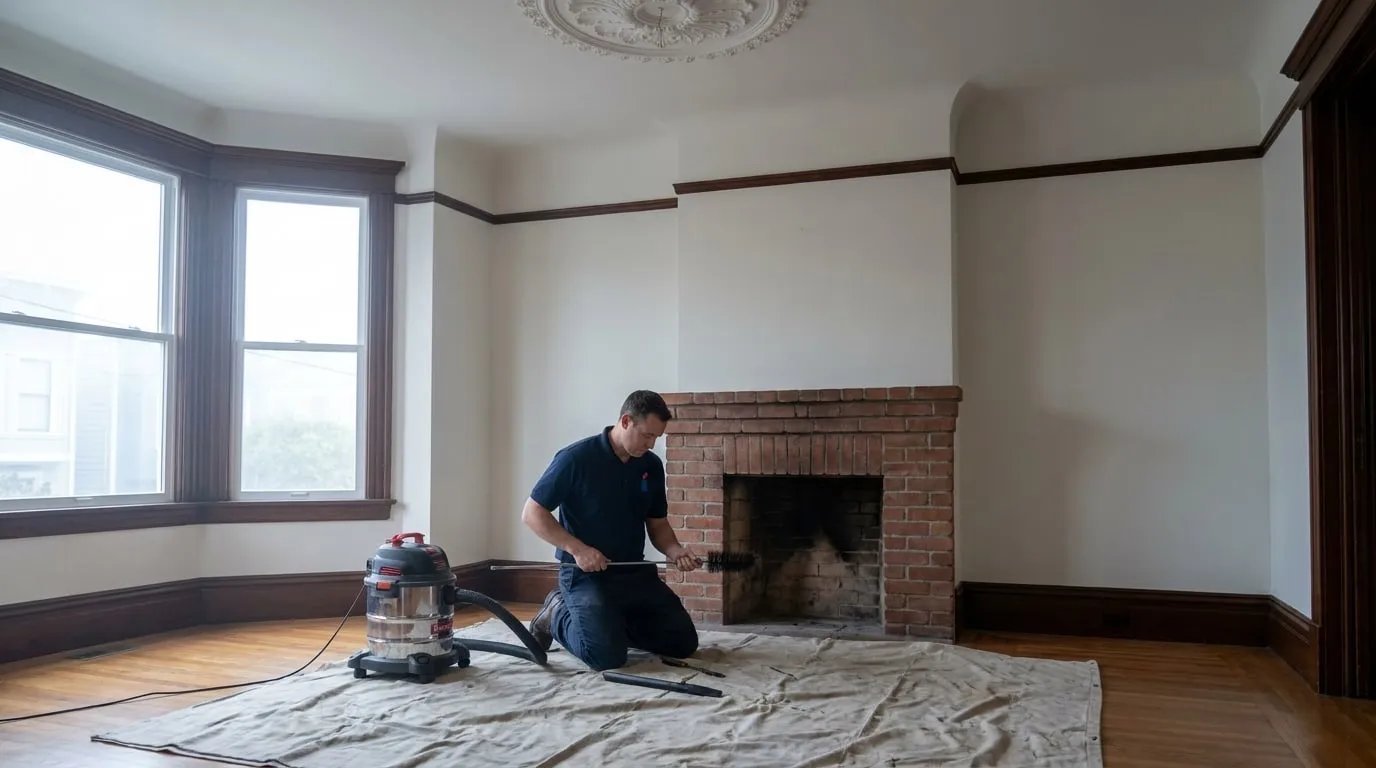
A little of it is normal. Enough of it, built up over one or more seasons of occasional fires, is fuel sitting inside a chimney that occasionally sees temperatures hot enough to ignite it. A chimney sweep is the mechanical removal of that buildup: a brush sized to the exact diameter of the flue, run its full length from the firebox to the top of the liner, breaking the creosote and soot loose so it can be vacuumed out rather than left to accumulate visit after visit.
San Francisco’s mild climate means a lot of fireplaces here get lit occasionally through the cooler months rather than run daily the way a wood stove might elsewhere, and that occasional-use pattern is exactly what causes owners to underestimate how long it has actually been. Creosote does not need daily fires to accumulate to a dangerous level: it needs time, and an annual check is the only reliable way to know where a flue actually stands.